The Challenge: "Masks"
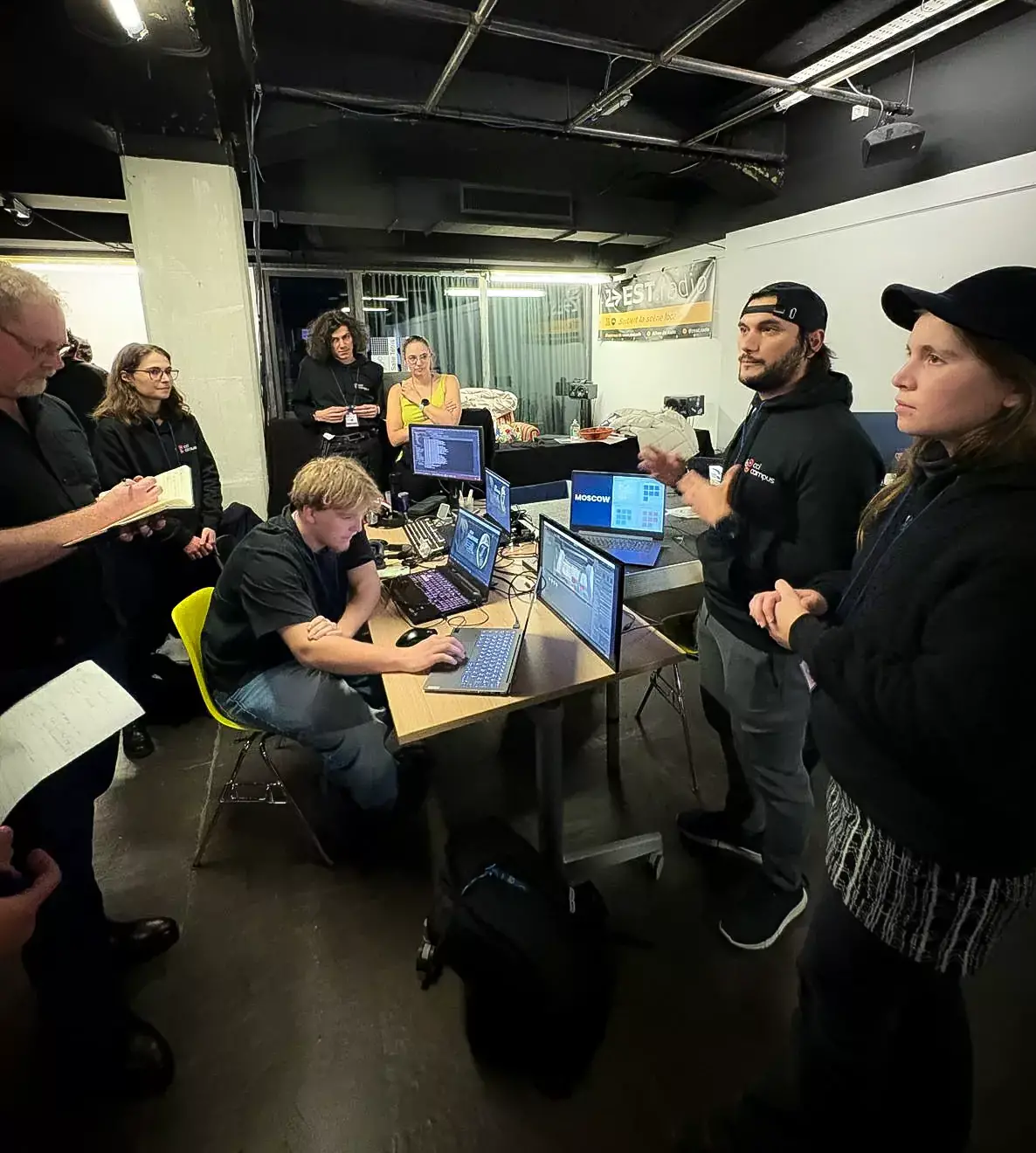
The theme for the Global Game Jam 2026 was "Masks". We had 48 hours. None of us had shipped a game in Unity before.
Our concept? A first-person survival game where the air is toxic. The "mask" isn't just a cosmetic item; it's your life support. The gameplay loop is simple but stressful: Find a mask, keep breathing, or die.
Game Design: The Oxygen Loop
Before touching a single polygon, we mapped out the game's logic and user flow in Figma. We needed a system that was scalable but simple enough to code in two days.
The Core Loop: Play → Explore Room → Oxygen Decays → Find Mask → Oxygen Refills → Difficulty Increases → Game Over.
Wanna try it on Figma ? →3D Art & Optimization
As the primary 3D Artist, my job was to build the world. I used Blender to create a modular sci-fi corridor kit. To ensure the game ran smoothly on the jam's presentation PCs, I focused on strict optimization:
- Low Poly Count: Kept geometry simple to allow for many instances.
- Modular Design: Walls, floors, and ceilings snap together, allowing us to build infinite variations of the level quickly.
- Site-Specific Textures: The industrial aesthetic is based on Le Shadok (our Jam venue). I took photos of the on-site concrete and metal surfaces, converting them into a single Texture Atlas. This gave the game a grounded, realistic feel while maintaining strict draw-call optimization.
UI Design: Survival Minimalism
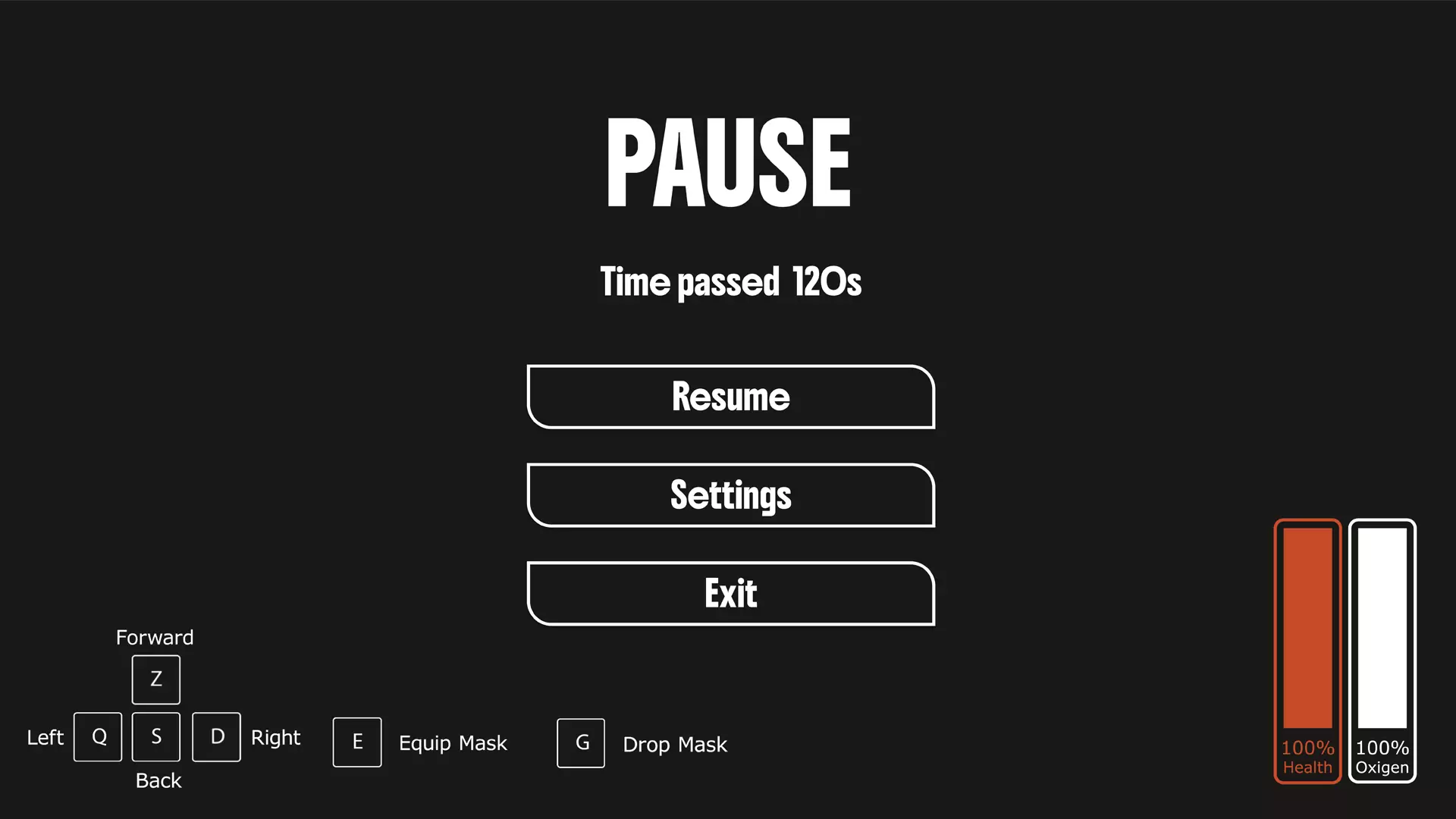
For the interface, we wanted to avoid clutter. Simplicity and effectiveness was our signature.
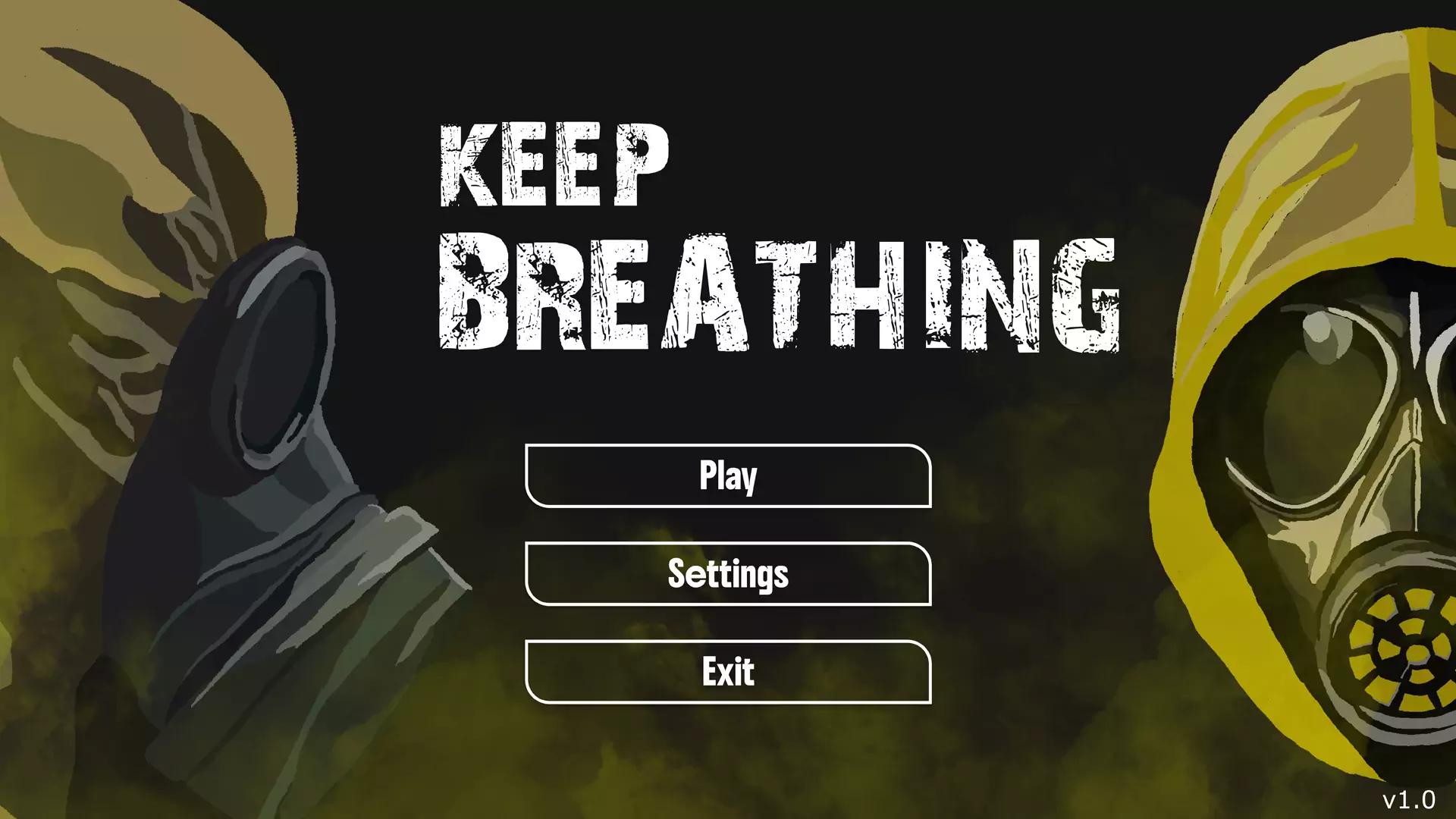
- Main Menu: Simple, setting the tone immediately.
- In-Game HUD: Instead of one life bar, we created two, one for oxigen and another for health, a timer that counts the points and the interaction buttons.
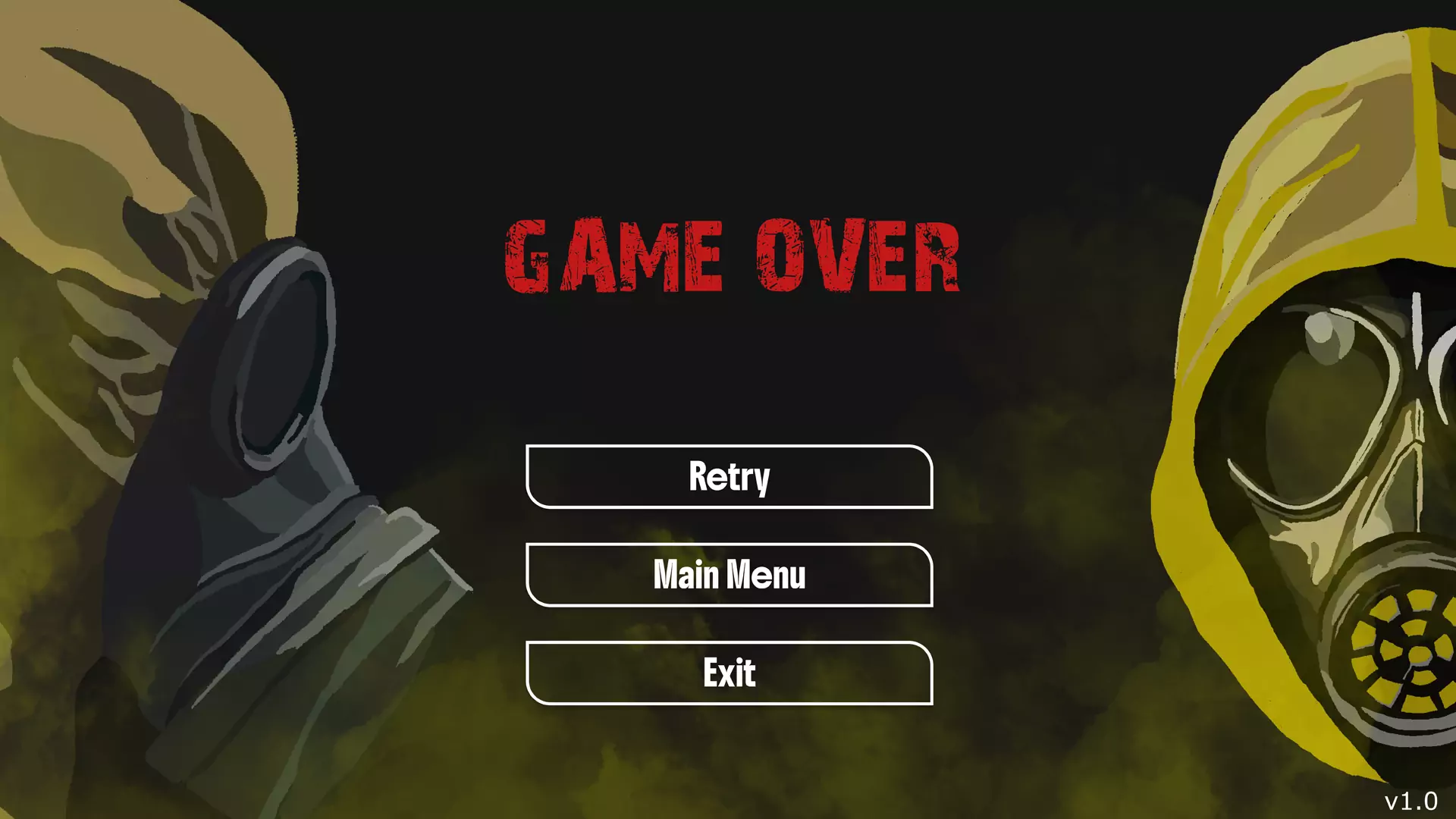
- Game Over: High score display to encourage replayability (the "Just one more run" effect).
The Outcome
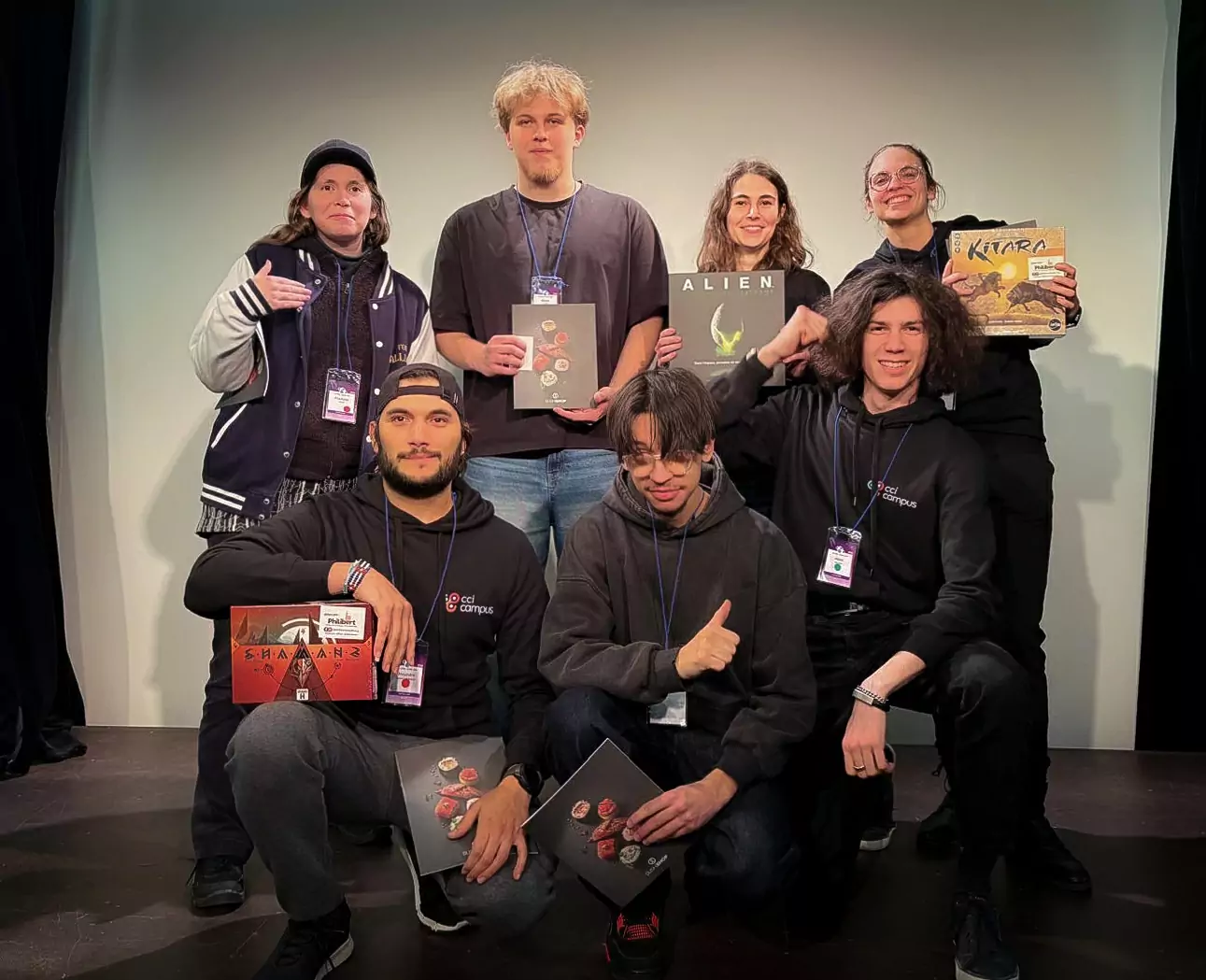
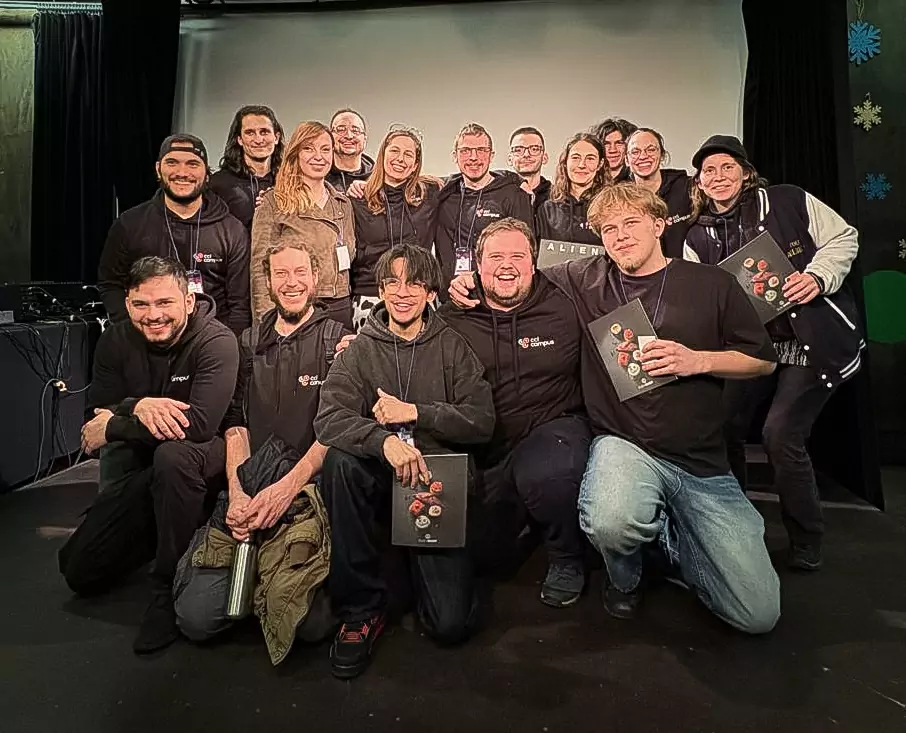
48 hours, liters of coffee and Red Bulls, and just a few hours sleep later, we presented "Keep Breathing" at Le Shadok, Strasbourg. The judges recognized the potential, and creativity of our build and the conception of our systems, awarding us Best Technical Achievement.
For a team using Unity for the first time, this was a massive validation of our ability to learn and adapt on the fly.